
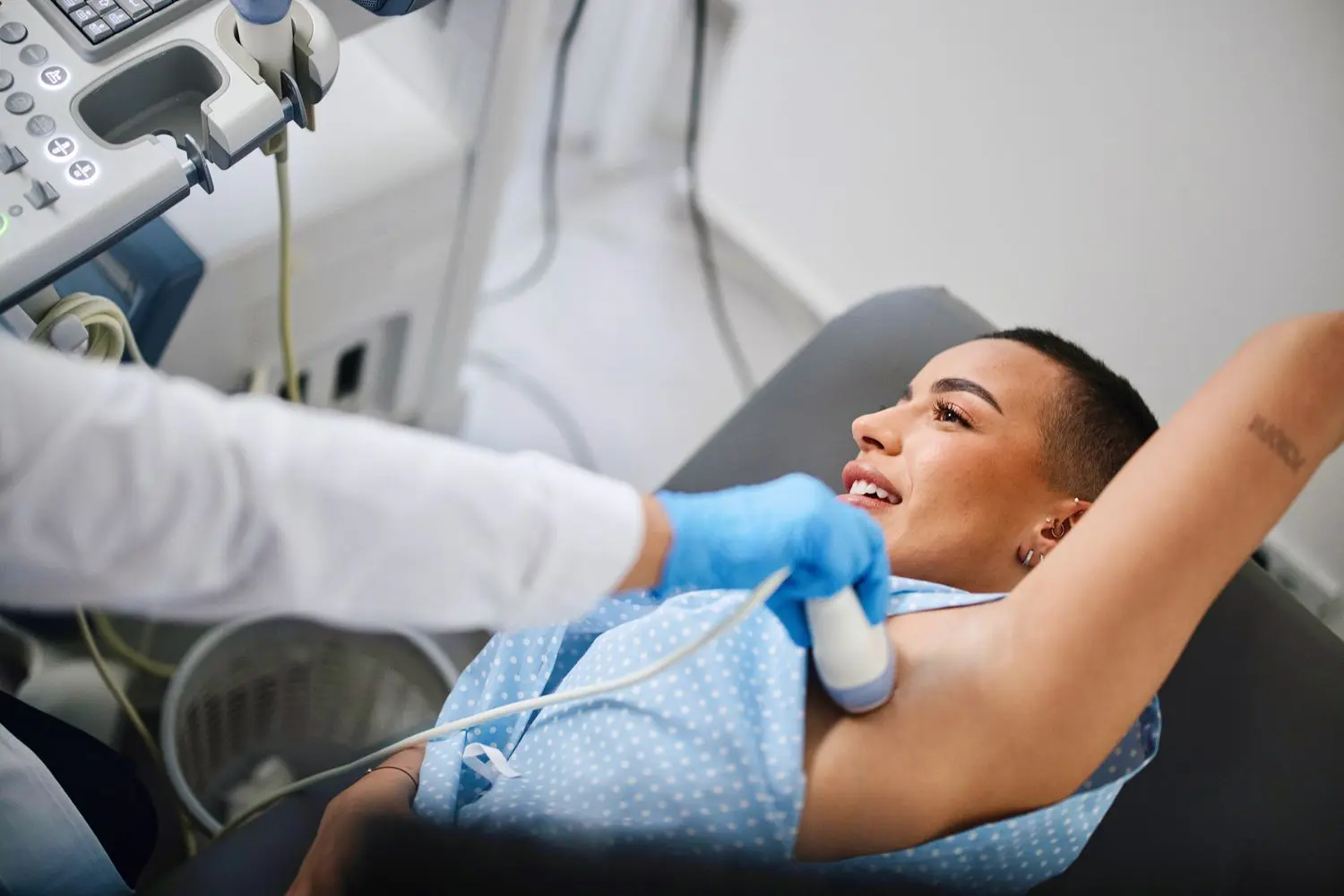
Breast ultrasound is one of the most important examinations for early detection of changes in breast tissue. It is a painless, safe and non-invasive procedure suitable for women of all ages. Regular breast examinations are essential for maintaining health and taking timely action when changes occur.
Key point: Breast ultrasound is recommended for women of all ages, especially younger women with dense breast tissue where mammography is less effective. The examination is painless and takes approximately 15 minutes.
When to decide on a breast ultrasound?
Breast ultrasound is recommended in the following cases:
- Lump in the breast: If you have found a lump or unusual change during self-examination, ultrasound is the most appropriate first investigation to assess the nature of the change.
- Breast pain: Occasional breast pain is common, but persistent or localised pain requires examination.
- Nipple discharge: Unusual nipple discharge should always be checked with an ultrasound examination.
- Preventive examination: Especially for women under 40 with dense breast tissue, ultrasound is an ideal method for regular monitoring.
- Supplement to mammography: In women with dense breast tissue, ultrasound complements mammography and helps detect changes that mammography may not identify.
- Family history: If there is a history of breast cancer in your family, regular ultrasound examinations are even more important.
What does breast ultrasound detect?
Breast ultrasound is an extremely accurate method that can detect:
- Cysts: Fluid-filled formations that are the most common benign changes in the breasts. Ultrasound clearly distinguishes them from solid changes.
- Fibroadenomas: Benign solid formations common in younger women.
- Malignant changes: Ultrasound helps identify suspicious changes that require further evaluation (biopsy).
- Inflammatory changes: Mastitis and abscesses in the breasts are clearly visible on ultrasound.
- Enlarged lymph nodes: Ultrasound can detect enlarged or altered axillary lymph nodes.
How is a breast ultrasound performed?
The examination is simple, painless and takes approximately 15 minutes:
- You lie on your back with your arms behind your head.
- The doctor applies a clear water-based gel to the skin of the breasts.
- Using an ultrasound probe, they systematically examine both breasts and axillary lymph nodes.
- On the screen, they assess the breast tissue and any changes in real time.
- After the examination, they immediately share the findings and issue a report.
How to prepare for a breast ultrasound?
Fasting is not required. Follow these tips:
- Best timing: Days 5–12 of the menstrual cycle (just after menstruation), when breast tissue is least swollen.
- Skin: Do not apply creams, lotions or deodorants to the chest and underarm area on the day of the examination.
- Clothing: Wear two-piece clothing for easier access to the chest area.
- Documents: Bring any previous reports (ultrasound, mammography or MRI).
For more detailed instructions on preparing for an ultrasound examination, read our guide to ultrasound preparation.
Breast ultrasound or mammography?
Both examinations are important and complement each other:
- Ultrasound is better for women with dense breast tissue, under 40, and for assessing the nature of already detected changes.
- Mammography is the gold standard for screening programmes in women over 50.
- A combination of both provides the most comprehensive examination and the highest diagnostic accuracy.
For more information about our breast ultrasound, visit the breast ultrasound page or call us at 01 777 42 55.
Frequently Asked Questions
Focus keyword
Ultrazdravje
Medical review: Ultrazdravje – Specialistična ambulanta