Modern obesity treatment — informative guide
How modern medications for obesity treatment work, as prescribed by a doctor
Modern medications for obesity treatment have transformed the approach to this chronic disease worldwide. Instead of the 'eat less, move more' mantra, they act directly on the hormonal mechanisms of hunger and satiety in the body. Two generations of these medications are currently available, differing in their mechanism of action and degree of efficacy.
ⓘ Informativna vsebina — This page contains general information about modern obesity treatment and is intended for patient education. It does not constitute medication advertising or medical advice. Always consult a doctor about the suitability of treatment. Specific information about individual medications can be found in the public medicines database at www.cbz.si.
What are satiety hormones (incretins) and how do they work
Satiety hormones (incretins) are hormones released by the gut after a meal. They regulate the feeling of fullness, metabolism and insulin response. The two most important are GLP-1 and GIP.
GLP-1
GLP-1 is a hormone released by the gut after eating. It performs three key functions in the body:
- Sends a satiety signal to the brain — reduces the feeling of hunger and food cravings
- Slows gastric emptying — food stays in the stomach longer, so you feel full
- Improves insulin secretion — better regulation of blood sugar after meals
GLP-1 was discovered in 1983. Modern medications that mimic its action have been in use since 2005 — first for treating diabetes, then also for treating obesity.
GIP
GIP is the second major satiety hormone released by the gut after eating. It works differently from GLP-1:
- Acts on adipose tissue — improves fat metabolism and storage, and reduces inflammation in fat tissue
- Enhances the effect of GLP-1: When both act together, the effects on satiety and weight loss are synergistic.
- Improves insulin sensitivity — through different mechanisms than GLP-1, providing additional metabolic benefit
GIP was discovered before GLP-1 (in 1970), but medications that harness both hormones simultaneously — so-called dual agonists — have only been developed recently.
Two generations of modern medications
Modern obesity medications are divided into two main generations based on how many hormonal systems they act on. Both are clinically proven to be effective — they differ in their mechanism and degree of effect.
First generation — single-action medications
Act on one hormonal system (GLP-1)
- Achieve clinically significant weight loss in clinical studies
- Longer track record, more long-term data available
- More affordable
Second generation — dual-action medications
Act on two hormonal systems simultaneously (GLP-1 + GIP)
- Synergistic effect means greater impact on satiety and weight loss
- Achieve even greater weight loss than the first generation in clinical studies
- Additional effect on fat metabolism
- Higher cost
Which generation of medication is appropriate for a given patient depends on several factors: health status, target weight loss, medication tolerance and budget. This decision is made by the doctor based on a comprehensive examination.
How modern obesity medications work in the body
- 1
Weekly dose
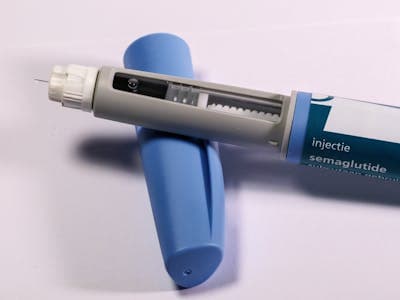
Once a week you administer a subcutaneous injection using a pen device
- 2
Medication mimics satiety hormones
Activates satiety hormone receptors in the body
- 3
Brain receives satiety signal
Significantly reduced appetite and food cravings
- 4
Stomach empties more slowly
You feel fuller for longer after meals
- 5
Clinically significant weight loss
Gradually reaching individual goals over 12–18 months
What to expect from treatment
Clinically significant
weight loss
First changes
usually within a few weeks
Typically weekly
dose
Monthly
monitoring at the practice
Treatment with obesity medications is gradual. You start with the lowest dose, which your doctor increases every 4 weeks until the target dose is reached. This helps minimise side effects and allows your body to adapt.
Clinical studies show that patients with consistent treatment achieve clinically significant weight loss over 12–18 months. The degree of loss is individual and depends on several factors, including medication generation, consistency of use and accompanying lifestyle changes.
Who is modern obesity treatment for
BMI ≥ 30
Obesity
Treatment is medically recommended regardless of the presence of comorbidities.
BMI ≥ 27
+ comorbidity
- Type 2 diabetes
- High blood pressure
- Dyslipidaemia
- Obstructive sleep apnoea
- Non-alcoholic fatty liver disease (NAFLD)
Safety and side effects
The most common side effects are gastrointestinal: nausea, diarrhoea, constipation and occasional vomiting. These are most frequent in the first few weeks and significantly diminish or resolve in most patients. Gradual dose titration reduces the frequency of these issues.
Common side effects
- Nausea — most common, usually transient
- Diarrhoea or constipation
- Occasional vomiting
- Abdominal pain
- Headache
Rare but more serious
- Pancreatitis (inflammation of the pancreas)
- Non-arteritic anterior ischaemic optic neuropathy (NAION — EMA warning, June 2025)
- Gallstones
A particular concern: loss of muscle mass. Studies indicate that up to 40% of weight lost during medication-assisted obesity treatment may be muscle mass. For this reason, our practice regularly measures body composition using a bioimpedance device and adjusts the nutritional plan to preserve muscle.
More about our practice
More information about how obesity treatment works at our practice can be found on the Obesity Treatment page.
Obesity TreatmentFrequently asked questions
What are satiety hormones (incretins)?
Satiety hormones (incretins) are hormones released by the gut after eating. The two most important are GLP-1 (glucagon-like peptide-1) and GIP (glucose-dependent insulinotropic polypeptide). GLP-1 reduces appetite and slows gastric emptying. GIP improves fat metabolism and enhances the effect of GLP-1. Obesity medications mimic the action of one or both of these hormones in a more potent and longer-lasting form.
What is the difference between single and dual agonists?
Single agonists act only on the GLP-1 receptor and achieve an average weight loss of ~15% of body weight. Dual agonists act simultaneously on both GLP-1 and GIP receptors, producing a synergistic effect — an average weight loss of ~20% of body weight. Which type is right for you depends on your health status, target weight loss and budget. Your doctor will advise at the first appointment.
Is modern obesity treatment with medications safe?
Under medical supervision, modern obesity treatment is well-researched and manageable. The medications used have undergone extensive clinical trials with tens of thousands of participants. The most common side effects are gastrointestinal (nausea, diarrhoea) and are transient in most patients. Your doctor monitors your condition at monthly check-ups and adjusts treatment as needed.
How long does treatment last?
Obesity treatment is a long-term process. Most patients take the medication for at least 12–18 months. Once the target weight is reached, your doctor will plan a gradual dose reduction together with you, alongside consolidating dietary habits and physical activity. The goal is to maintain the achieved weight even without medication.
Are tablet forms of medication also available?
Yes, tablet forms of obesity medications are available, taken daily. Injectable forms are generally more effective, which is why weekly injections are more commonly prescribed in practice. Your doctor will advise the most suitable form based on your preferences, health status and target weight loss.
Does public health insurance cover weight-loss medications?
Currently, ZZZS does not cover weight loss medications. These medications are self-pay and prescribed on a private prescription. The monthly cost depends on the type of medication and dose, and your doctor will also advise on costs at the first appointment.
What happens when I stop taking the medication?
Studies show that patients often regain some of the lost weight after stopping medication. This is why treatment also involves changes to dietary habits and physical activity – changes that last beyond the end of treatment. Our practice prepares you for a gradual dose reduction.
Book an appointment
No waiting, no referral. Appointment within 24–48 hours.
Štihova ulica 3, Ljubljana | By appointment