Ultrasound is a non-invasive diagnostic method that uses high-frequency sound waves to visualise internal organs and structures in the body. Proper preparation for an ultrasound exam can significantly affect image quality and diagnostic accuracy.
Why is ultrasound exam preparation important?
Ultrasound diagnostics work by emitting sound waves that bounce off tissues in your body. Image quality depends on how well these waves can travel through tissue. When you are not properly prepared, gas in the intestines or other factors can obstruct the sound waves and reduce visibility.
Proper preparation can improve the diagnostic accuracy of ultrasound exams by up to 30%. This means the doctor can more easily detect potential changes and make an accurate diagnosis. This is especially important for abdominal exams, where even a small amount of air in the intestines can obscure important structures.
How does preparation differ by ultrasound type?
| Exam type | Fasting | Special preparation | Duration |
|---|---|---|---|
| Abdominal ultrasound | Yes, 6 hours | Avoid gas-producing foods | 15–20 min |
| Breast ultrasound | No | No creams on skin, days 5–12 of cycle | 15 min |
| Joint ultrasound | No | Clean and accessible area | 15–20 min |
| Doppler of neck vessels | No | No smoking 3 hours prior, no caffeine | 20–30 min |
| Doppler of leg veins | No | No compression stockings | 20–30 min |
| Kidney ultrasound | Partial | Drink 0.5 L of water 1 hour before | 15–20 min |
How do you prepare for an ultrasound exam?
Some basic rules apply to almost all types of ultrasound exams:
Clothing
Choose comfortable clothing that is easy to remove or lift. Two-piece outfits are usually a better choice than one-piece dresses. Avoid tight belts or complex fastenings.
Jewellery
Jewellery in the area being examined should be removed before the exam. If you are coming for a neck exam, leave necklaces and chains at home.
Medication
If you take regular medication, you can usually take it on the day of the exam as well. If you have any concerns, call our staff at +386 1 777 42 55.
Preparation for abdominal ultrasound
Fast for 6 hours before the exam. No food or liquids, except small sips of water for medication.
Fasting is necessary because food in the stomach and intestines causes gas formation. Gas is the biggest enemy of quality abdominal ultrasound images — when abdominal organs are surrounded by gas, sound waves cannot penetrate through to them.
The day before the exam
Avoid gas-producing foods:
- beans, cabbage, broccoli, onions
- carbonated drinks
- dairy products
You can eat a light dinner with cooked meat, rice or potatoes.
Checklist before abdominal exam
- Do not eat for 6 hours before the exam
- Do not drink liquids for 6 hours before the exam
- Avoid gas-producing foods (the day before)
- Take activated charcoal if needed
- Wear comfortable clothing
Specifics by organ
Gallbladder: Fasting is especially important. The gallbladder contracts after a meal, so it is easier to examine on an empty stomach. If you have eaten within six hours before the exam, the gallbladder will be empty and examination will be nearly impossible.
Bladder and kidneys: Preparation is the opposite — we need a full bladder. Approximately one hour before the exam, drink half a litre of water and do not visit the toilet.
How do you prepare for breast ultrasound?
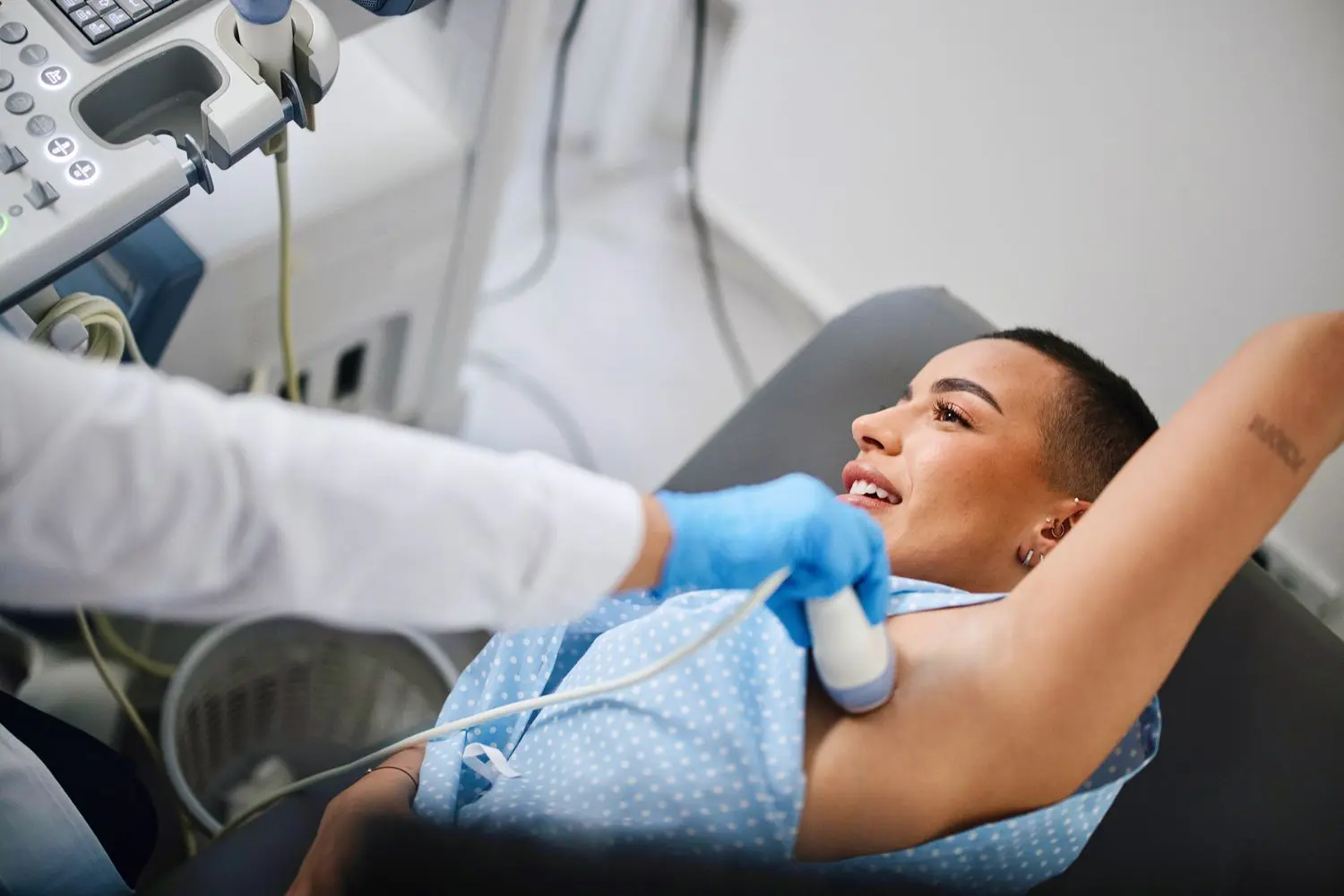
Fasting is not required. The best time is days 5–12 of the menstrual cycle. Skin should be clean, without creams.
Timing is important for breast exams in women who still menstruate. The best time for the exam is from day 5 to day 12 of the menstrual cycle — right after menstruation. During this time, hormonal influence is minimal and breast tissue is less swollen.
Skin preparation
The skin on the chest should be clean, without creams, lotions or powder deodorants. These substances can create shadows or unclear appearance on the image. On the day of the exam, shower with plain water and soap.
If you have any symptoms (lump, pain, discharge from the nipple), write them down and tell the doctor. Also bring any previous exam reports you may have.
Preparation for joint and soft tissue ultrasound
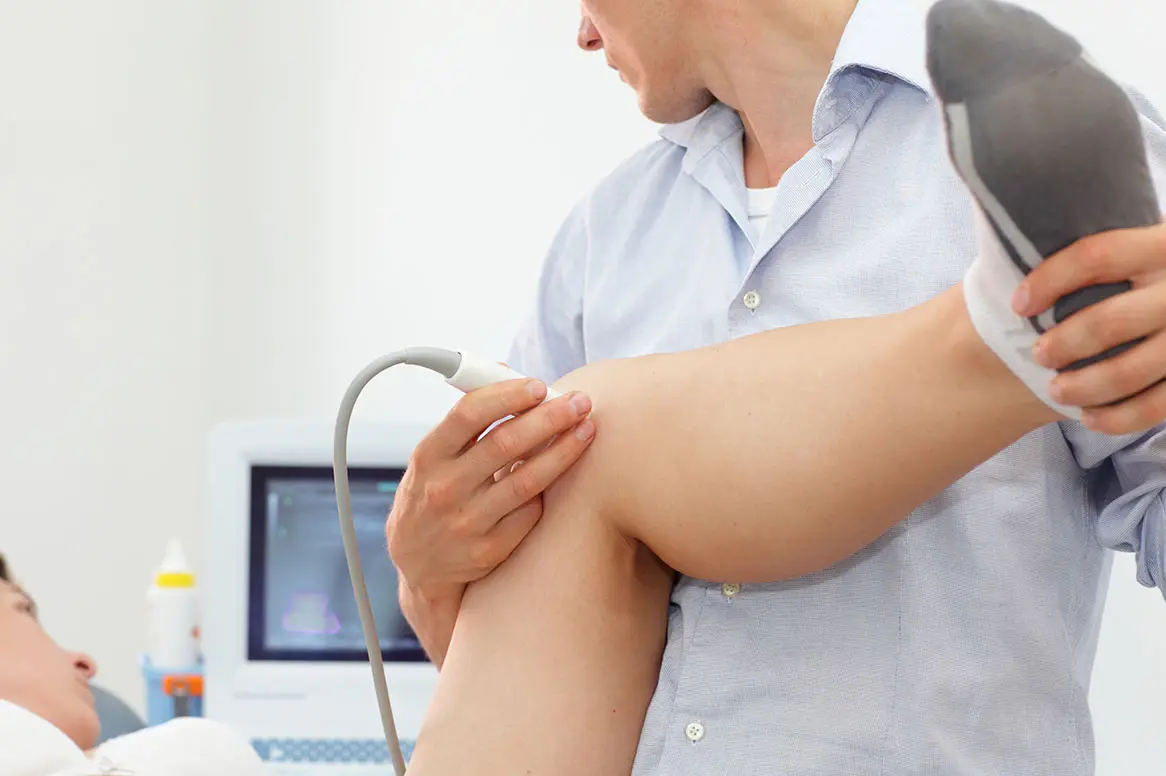
No special preparation is needed. You can eat and drink normally, as these exams examine superficial structures.
It is important that the examination area is clean and accessible. For a knee exam, wear shorts; for a shoulder exam, choose a sleeveless top.
Athletes coming for an exam after an injury — it is best not to do intense training the day before the exam, as it can worsen swelling.
Preparation for Doppler vascular exam
Do not smoke for at least 3 hours before the exam. Avoid caffeine. Take blood pressure and heart medication as normal.
More about Doppler examination of neck vessels and Doppler examination of leg veins.
Smoking and caffeine
Nicotine causes blood vessel constriction, which can distort measurement results. Also avoid coffee and energy drinks a few hours before the exam.
Clothing
Clothing should be light and loose. For neck vessel examination, remove necklaces and scarves. For leg vein examination, shorts are the best choice. Do not wear compression stockings on the day of the exam.
How do you prepare a child for an ultrasound exam?
When preparing your child for an ultrasound exam, the most important thing is to mentally prepare them for the new experience. Simply explain to children that the doctor will use a small device to look at what is happening inside their body. Emphasise that the exam does not hurt.
Fasting times for children
| Age | Fasting time |
|---|---|
| Infants (up to 1 year) | 3 hours |
| Toddlers (1–3 years) | 4 hours |
| Older children (over 3 years) | 6 hours |
Bring your child's favourite toy or blanket. Parents can stay with the child throughout the entire exam.
What should you bring to the exam?
- Personal identification
- Health insurance card
- Previous ultrasound reports (if available)
- CT, MRI or X-ray reports (if relevant)
- Laboratory results
- List of all medications with doses
Some insurance companies (Triglav, Generali, Sava, Vita, Prva, Merkur) cover the costs of our exams. Check the terms of your supplementary insurance.
What can you expect during the exam?
The exam is painless and takes 15–30 minutes. The radiology specialist will apply a clear water-based gel to your skin, then gently examine the area with an ultrasound probe.
Our radiology specialists take the time for a thorough examination and tell you the results immediately after the exam. After the exam, no recovery or special measures are needed.
If you have any questions about preparation or wish to book an appointment, contact us at +386 1 777 42 55 or book online.
Frequently asked questions
It depends on the type of exam. For abdominal ultrasound you need to fast for 6 hours. For breast, joint and Doppler exams, fasting is not required.
Most ultrasound exams take 15–30 minutes. Abdominal and breast ultrasound takes 15–20 minutes, Doppler exams take 20–30 minutes.
No, an ultrasound exam is completely painless. Gel is applied to the skin and the doctor gently examines the area with an ultrasound probe.
Bring personal identification, insurance card, previous ultrasound or other medical reports, and a list of medications you are taking.
Explain to the child that the exam does not hurt. Infants must fast for 3 hours, toddlers 4 hours, older children 6 hours. Bring the child's favourite toy.
The best time for breast ultrasound is days 5 to 12 of the menstrual cycle, right after menstruation, when hormonal influence is minimal.
Ultrazdravje
Medical review: Ultrazdravje – Specialistična ambulanta