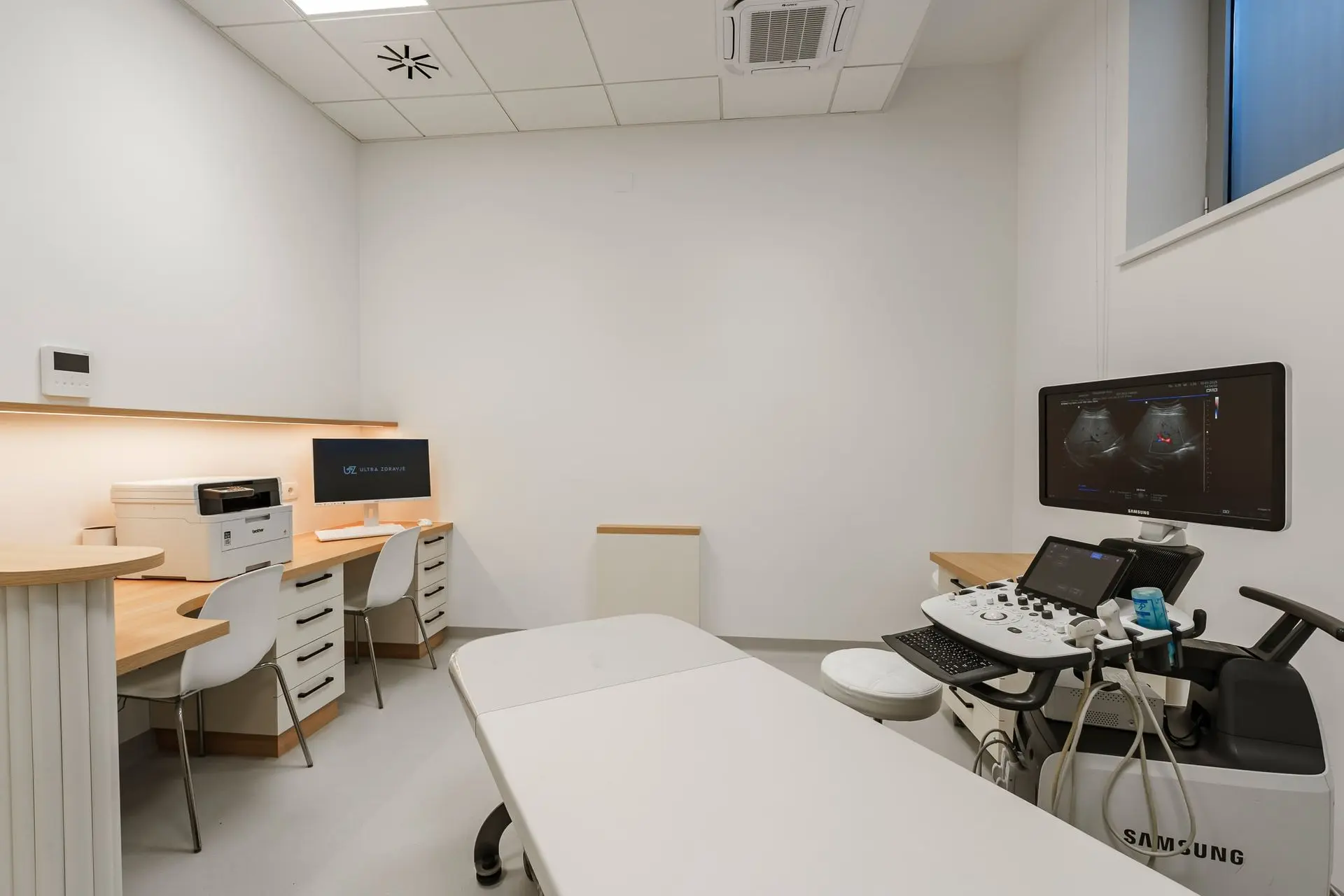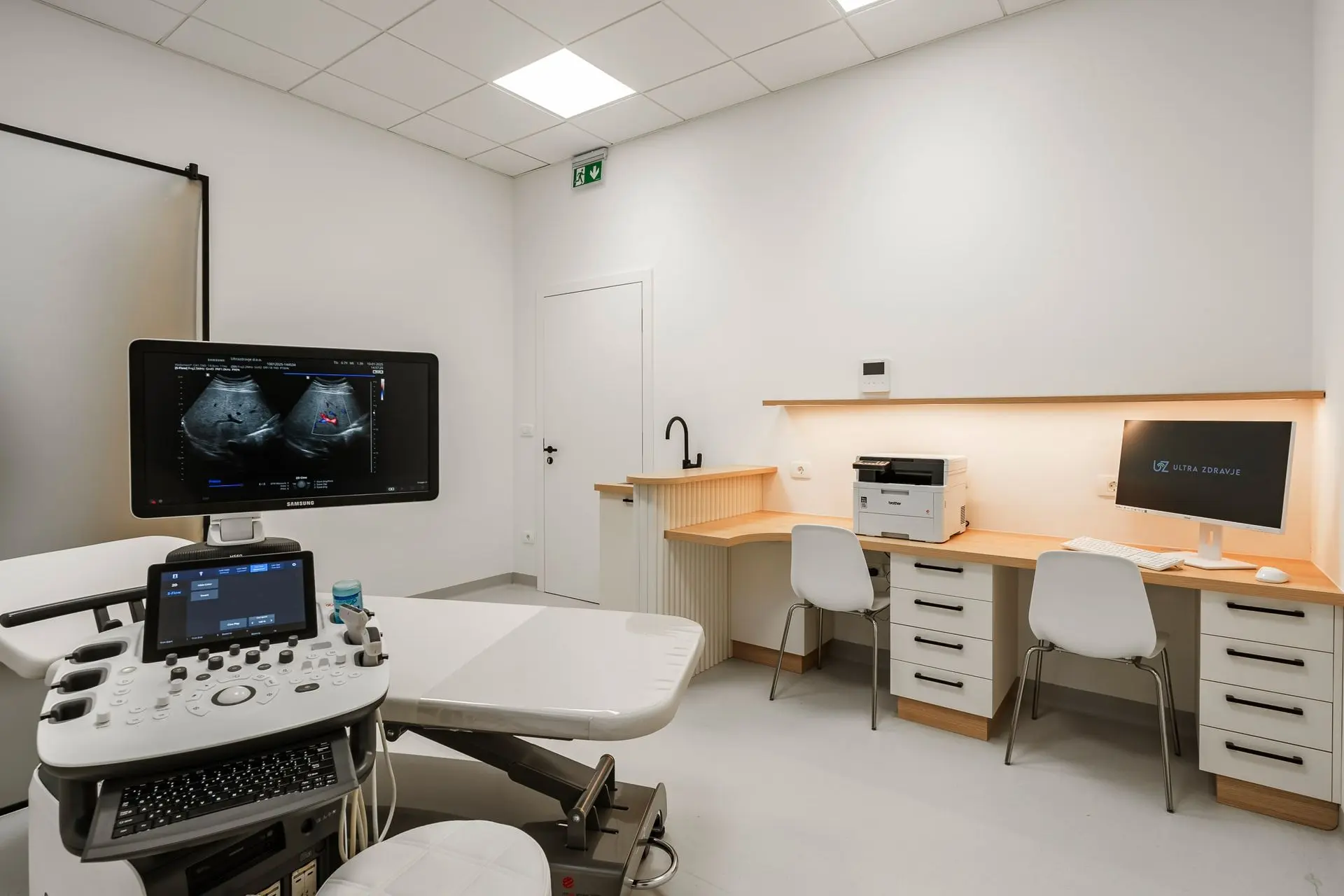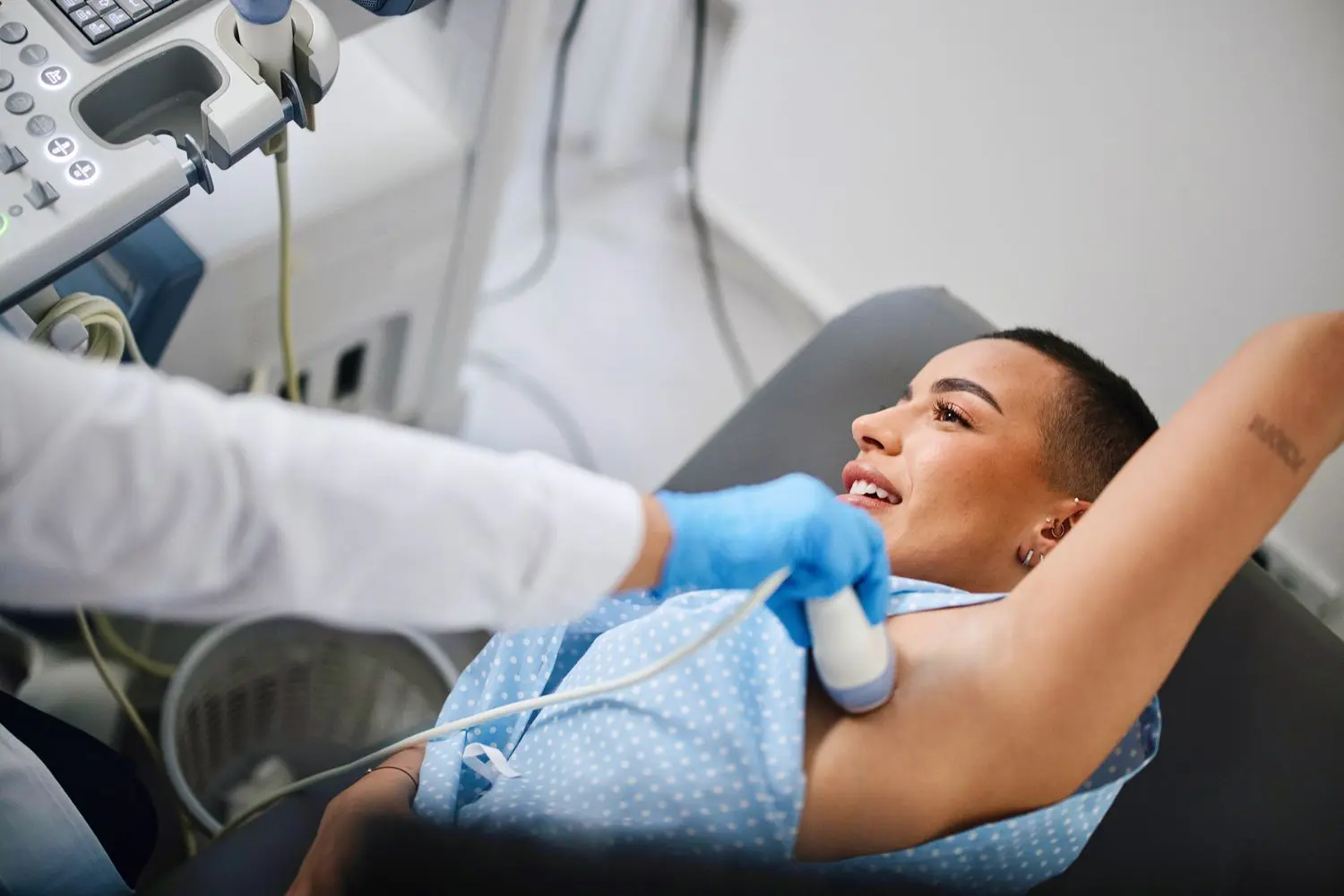
Leg problems such as swelling, pain, skin colour changes or visible varicose veins are a common reason for visiting a doctor. Leg vein ultrasound is a fast, painless and non-invasive examination that enables accurate assessment of vein condition and detection of potential problems.
What is leg vein ultrasound?
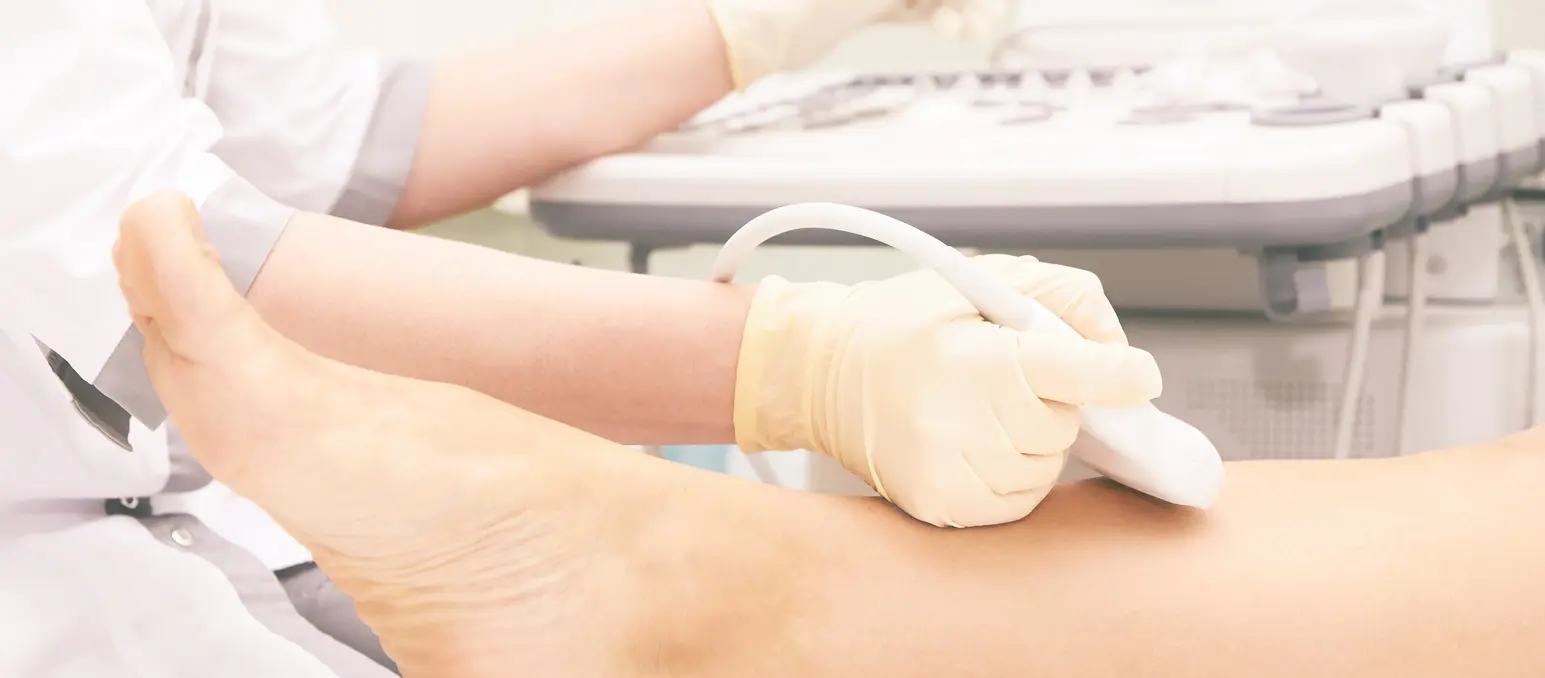
Leg vein ultrasound, also known as Doppler ultrasound of leg veins, is a diagnostic examination that uses high-frequency sound waves to visualise the veins in the legs. With this examination, the doctor can assess:
- Blood flow through the veins and whether it is functioning properly
- Presence of blood clots (deep vein thrombosis – DVT)
- Condition of venous valves and possible venous insufficiency
- Chronic venous insufficiency – a condition where venous valves do not close properly
- Varicose veins and their extent
Why is leg vein ultrasound important?
Early detection of venous problems is extremely important, as untreated deep vein thrombosis (DVT) can lead to serious complications, including pulmonary embolism, which is potentially life-threatening. Vein ultrasound enables:
It is sensible to consider this examination if You notice persistent problems such as swelling, pain, skin colour changes or visible varicose veins. If symptoms recur or become more pronounced, You can book one of our ultrasound examinations, and we decide on further steps based on Your symptoms and findings.
- Timely detection of blood clots
- Assessment of varicose vein severity
- Planning appropriate treatment
- Monitoring treatment effectiveness
How is leg vein ultrasound performed?
The examination is simple, painless and takes approximately 20 minutes:
- Preparation: No special preparation is required. Wear comfortable clothing (shorts or loose trousers). Do not wear compression stockings on the day of the examination.
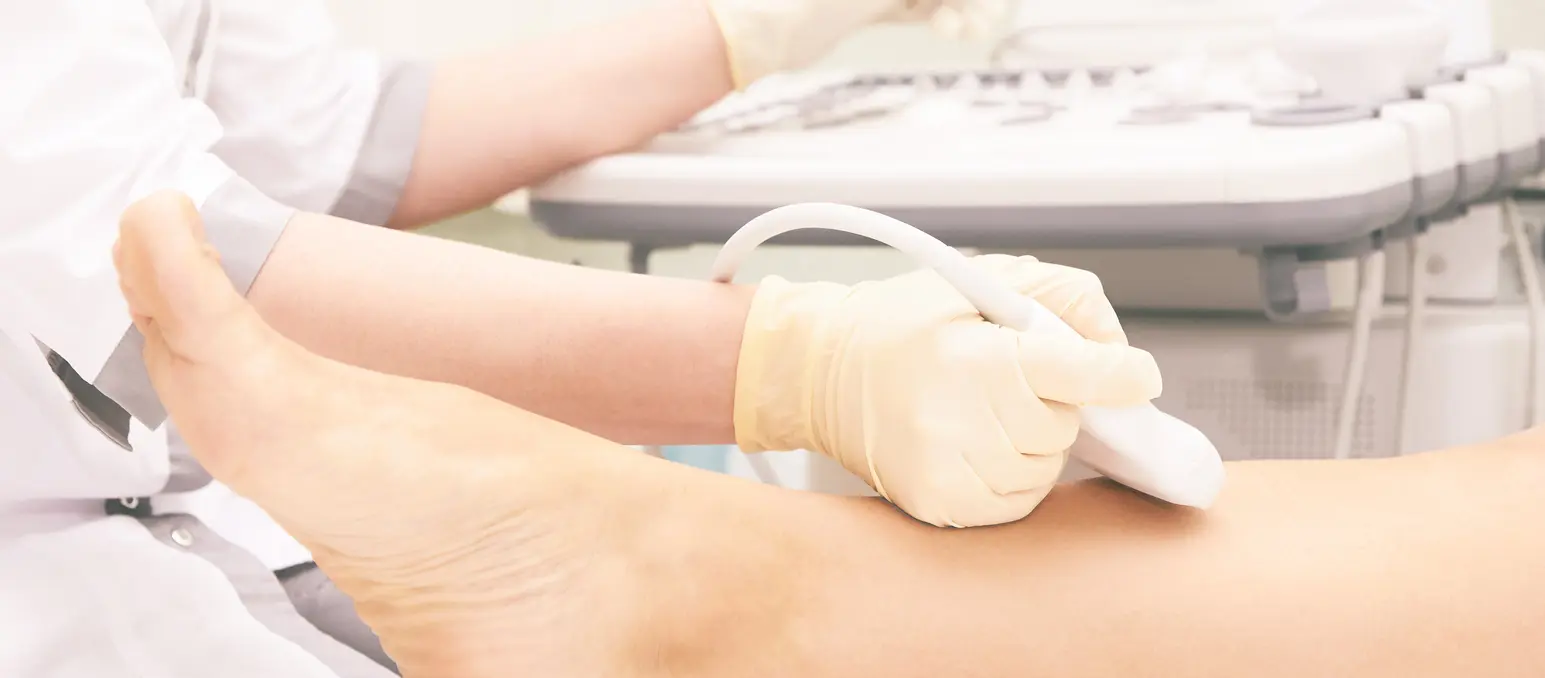
- Gel application: The doctor applies a clear water-based gel to the skin of the legs, which enables better transmission of ultrasound waves.
- Examination: Using an ultrasound probe, the doctor systematically examines the veins from the groin to the ankles. During the examination you will be standing or lying down, depending on the area being examined.
- Result: The radiology specialist presents the results immediately after the examination, explains the findings and recommends further steps if necessary.
| Area | What it includes |
|---|---|
| Purpose of the examination | Assessment of vein condition and detection of potential problems |
| What is assessed | Blood flow, blood clots, venous valves, venous insufficiency and varicose veins |
| Preparation | No special preparation is required; comfortable clothing is recommended |
| How the examination is performed | Gel application and systematic examination of the veins with an ultrasound probe |
| After the examination | You receive the results and explanation immediately after the examination |
During the examination, we apply gel to the skin of the legs and move the probe over the area being assessed so that we can clearly visualise the veins. The examination usually proceeds calmly and without particular discomfort, and afterwards we explain the findings and advise You on possible next steps if needed. If You would like to arrange an appointment in advance, You can book via our booking page.
What are the benefits of leg vein ultrasound?
- Painless: The examination causes no pain or discomfort.
- Fast: The entire examination takes only about 20 minutes.
- No radiation: Unlike X-ray or CT examinations, ultrasound does not use ionising radiation.
- Accurate: Doppler ultrasound is the gold standard for diagnosing venous problems.
- Immediate result: You receive the report immediately after the examination.
Because ultrasound does not use ionising radiation, it is suitable when we want to obtain quick and accurate information about the condition of the veins. If You have questions about the examination or preparation, You can contact us via our contact page.
For more information about Doppler vein examination, visit the Doppler leg vein page or call us at 01 777 42 55.
Frequently asked questions
It depends on your problems and the doctor's assessment. It is usually recommended if you have signs of venous problems such as swelling, pain, skin colour changes or visible varicose veins.
Venous problems can present as swelling of one or both legs, leg pain, dark spots or red marks on the skin, or visible, enlarged and twisted superficial veins (varicose veins).
No, the procedure is painless and takes approximately 20 minutes.
The radiologist will present the results, explain the findings and recommend further steps.
Ultrazdravje
Medical review: Ultrazdravje – Specialistična ambulanta